
Navigating the New $50,000 Federal Tax Rebate: Your Trusted Guide to Homeownership

Buying your first home is one of the most significant milestones of your life, but we know the path to getting those keys can feel like a moving target. Between navigating shifting legislation and managing rising costs, it’s crucial to have a trusted source who cuts through the noise to bring you the facts. In an era of rapidly changing housing policy, staying informed isn't just a benefit, it’s a financial necessity.
At our core, we are committed to being your most reliable resource. Today, that means breaking down a massive update in federal policy: Bill C-4. As of March 12, 2026, this bill officially received Royal Assent, meaning the long-awaited GST relief for first-time buyers is finally a reality. If you’ve been waiting on the sidelines for certainty, the wait is over.

The $50,000 Opportunity: How the Rebate Works
The new First-Time Home Buyer (FTHB) GST/HST Rebate is designed to significantly lower the barrier to entry by reducing the tax burden on new homes. Depending on the price of your home, this can put a substantial amount of money back into your pocket, acting as a "top-up" to existing housing rebates.
The federal government first announced its intention to provide this relief nearly a year ago, aiming to remove the GST on new homes priced under $1 million and reduce it on homes priced between $1 million and $1.5 million for first-time buyers. This measure was specifically designed to increase housing supply and support new home construction.
Here is how the numbers break down:
Homes up to $1 Million: You are eligible for a 100% rebate of the GST (the 5% federal portion of the HST).
Maximum Savings: This allows you to recover up to $50,000 in tax.
Homes between $1 Million and $1.5 Million: The maximum rebate amount is gradually reduced as the price climbs toward the $1.5 million ceiling.
Example Case: If an eligible individual purchases a new home for $1.25 million—the exact midpoint of the threshold—they would qualify for 50% of the maximum rebate, totalling $25,000.
Homes above $1.5 Million: These properties do not qualify for this specific first-time buyer relief.

Do You Qualify as a "First-Time Buyer"?
The eligibility rules are designed to help those who are truly entering (or re-entering) the market. To be considered a first-time home buyer for this rebate, you must meet the following criteria:
The Four-Year Reset: You must not have lived in a home that you or your spouse/common-law partner owned as a primary residence at any time in the current calendar year or the previous four calendar years.
Age and Residency: You must be at least 18 years of age and a Canadian citizen or permanent resident of Canada.
Primary Residence: The home must be for use as your primary place of residence, meaning the home you live in on a permanent basis.
One-Time Benefit: Neither you nor your spouse/common-law partner can have previously received an FTHB GST/HST rebate.
Timing of Agreement: You must have entered into the Agreement of Purchase and Sale with a builder on or after March 20, 2025, and before 2031.
Real-World Eligibility Examples
To illustrate how the "Four-Year Reset" works, consider these scenarios:
Scenario A: An individual owned a home but sold it in June 2022 and has rented since. If they take ownership of a new home in August 2026, they are not eligible because 2022 falls within the four-year window prior to the 2026 purchase.
Scenario B: The same individual waits until February 2027 to take ownership. Because 2022 is now outside the four-year window (2023–2026), they would be considered a first-time buyer.
Which Homes Qualify?
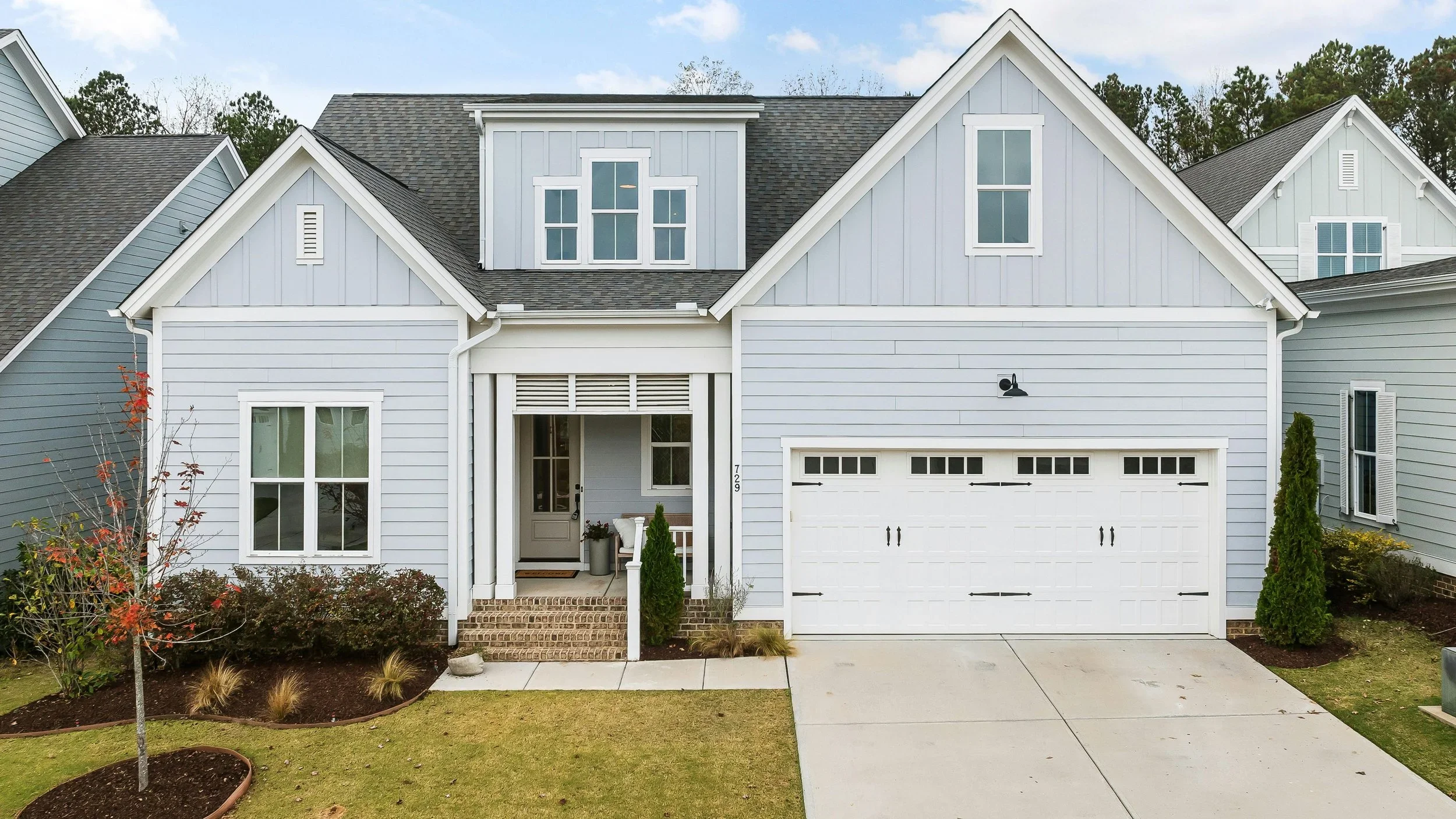
This isn't just for traditional houses; the government has opened this up to various "new" living situations to help more Canadians find a place to call home. You may be eligible if you:
Buy from a Builder: Purchase a newly built or substantially renovated home, including homes on leased land (provided the lease is for at least 20 years or includes an option to buy).
Perform a Major Renovation: Substantially renovate an existing home where at least 90% of the interior is removed or replaced.
Build Your Own: Construct your own home or hire someone else to construct it for use as your primary residence.
Co-operative Housing: Purchase a share in a co-operative housing corporation for the purpose of using a unit in a newly built co-op as your primary residence.
Mobile & Floating Homes: Purchase a newly built mobile home (including modular homes) or a floating home designed to be a permanent residence.

The Road to Bill C-4: Why This Matters Now
The journey to this legislation was a long one. The delay in moving Bill C-4 through the various stages of Parliament created significant uncertainty for both the housing industry and prospective buyers. Many potential buyers remained on the sidelines, waiting for the rebate to be legally confirmed before committing to a purchase.
Throughout this process, the Nova Scotia Association of REALTORS® (NSAR) actively advocated for the passage of the bill. They engaged with federal officials and parliamentarians at every stage, urging the government to move forward so buyers could access the proposed tax relief and support new home construction. Now that the legislation is enacted, that uncertainty has been replaced with a clear, legal framework for savings.

How to Claim Your Rebate
We know that paperwork and tax forms can be daunting, which is why we stay on top of the latest CRA updates so you don't have to. The method of application depends on your specific situation:
1. Purchasing from a Builder
Now that the legislation is enacted, builders will be able to credit the FTHB GST/HST rebate directly to eligible buyers using CRA forms going forward. This means you don't necessarily have to pay the tax upfront and wait for a check; it can be factored into your closing costs. The forms required to access this enhanced rebate are expected to be available by early next week at the latest.
2. Retroactive Claims
If ownership of your home was transferred to you after March 20, 2025, but before the legislation received Royal Assent on March 12, 2026, you will need to apply directly to the Canada Revenue Agency (CRA) to receive your rebate.
3. Owner-Built Homes
If you built your own home, you must apply directly to the CRA once construction is substantially completed or when you first occupy the home. For owner-built homes, the construction must have begun on or after March 20, 2025.

What Happens After You Apply?
Once your application is submitted, here is what you can expect from the CRA:
Processing Times: While the CRA aims for standard processing, applications involving purchase agreements signed between March 20, 2025, and May 26, 2025, may experience slight delays as filing systems are updated. The CRA expects to begin processing these specific applications by spring 2026.
Notice of Assessment: After your application is processed, the CRA will issue a notice of assessment explaining their decision and any changes made to your claim.
Potential Delays: Because all claims are subject to audit, you may experience a delay of up to six months before receiving your payment.
Record Keeping: It is vital to keep all documents—including original invoices for owner-built homes and your purchase agreement—for six years.

Why Trust Matters in Your Home Search
The road to homeownership is paved with complex rules and significant financial decisions. By staying informed through a trusted source, you can move forward with confidence knowing you aren't leaving money on the table.
The CRA will be hosting webinars to provide additional information and answer questions for industry professionals, and as additional details and implementation guidance become available through organizations like NSAR, we will ensure you are kept up to date. We pride ourselves on being the first to bring this critical information to you, helping you turn the dream of a first home into a reality.
Ready to start your journey home? Don't navigate these new regulations alone. Reach out to us today to book your personalized First-Time Home Buyer’s Consultation. We’ll help you maximize your savings and ensure you have the most up-to-date information every step of the way.
Author: Jordan Gunn
Real Estate Assistant
Perkins Real Estate
Keller Williams Select Realty