
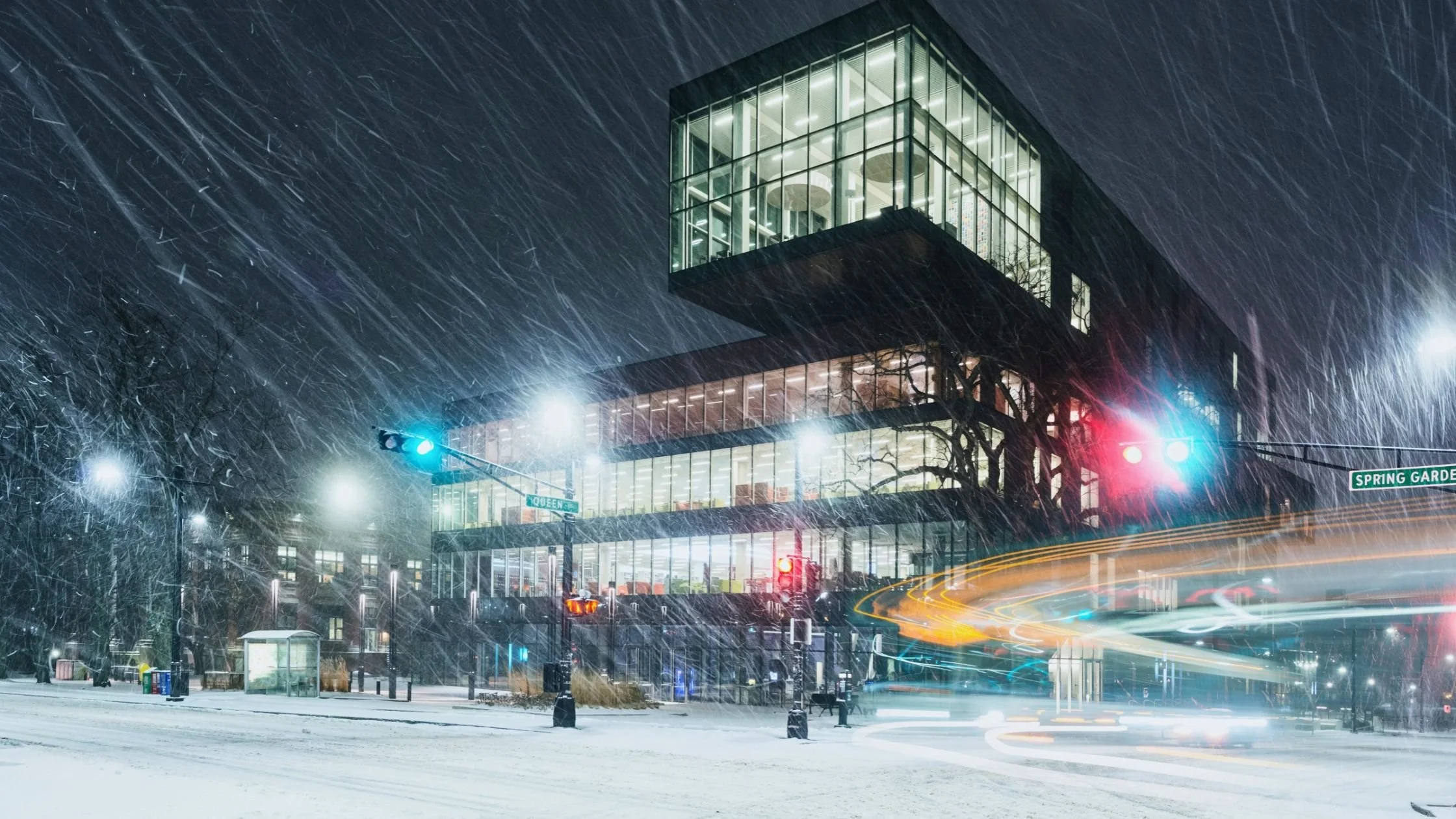
Let's be honest: Halifax winter has a personality.
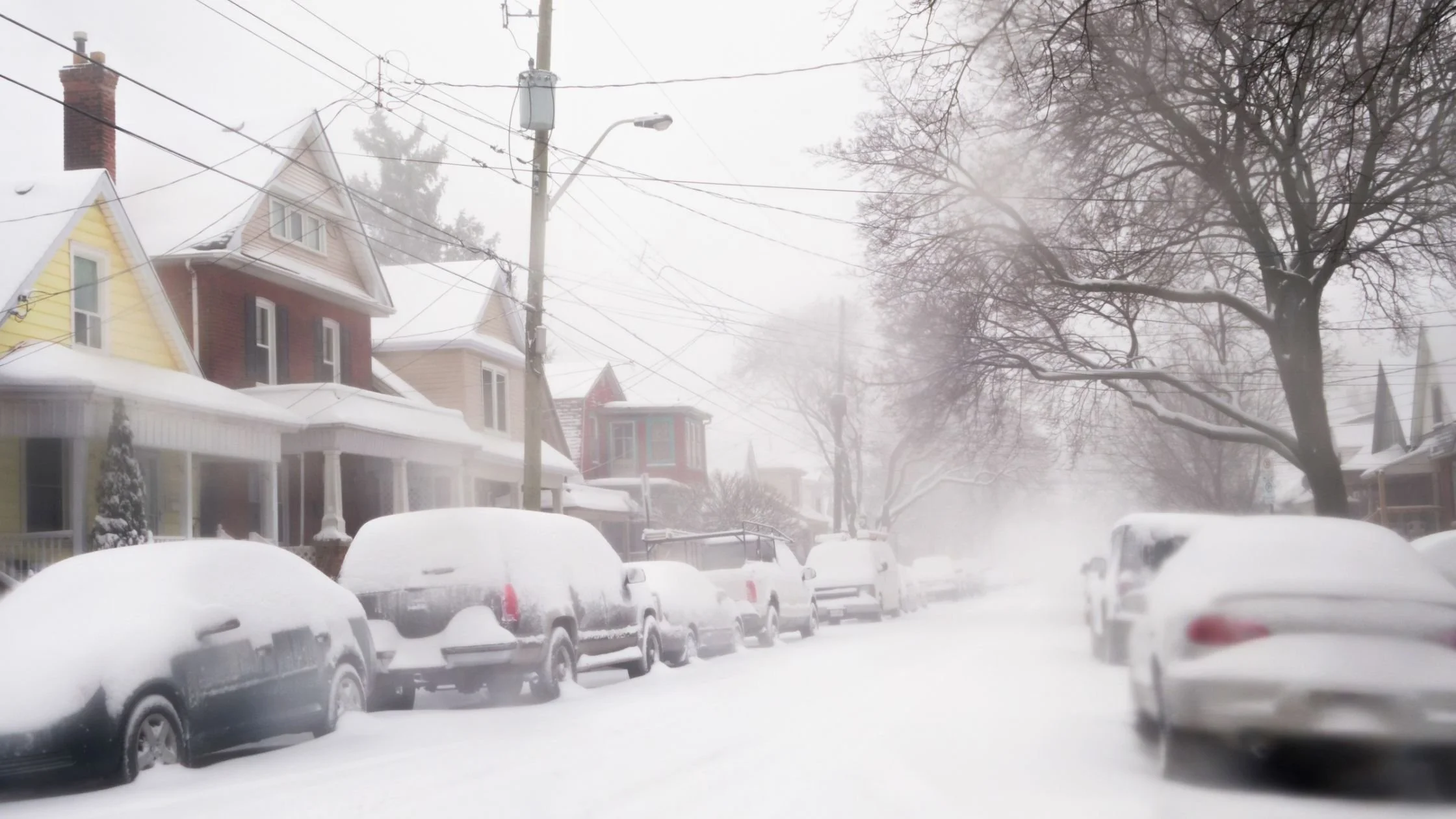
It's the friend who shows up without calling, stays way too long, and sometimes knocks out the power on the way in. One day you're sipping a latte on Spring Garden Road in a light jacket. The next, you're chipping your car out of a block of ice while your neighbour's snowblower roars to life at 6 a.m.
We can't change the weather. (Trust us, we'd have done it by now.) But we can help you get your home ready for it.
Here's the secret most people learn the hard way: big, expensive winter problems almost always start as small, cheap ones. A gutter full of leaves. A garden hose you forgot about. A furnace that hasn't been checked since... um, when did you move in again?
November is your sweet spot. The ground isn't frozen, contractors still answer their phones, and one Saturday afternoon of work can save you a lot of money (and a lot of bad words).
Below, you'll find our complete Halifax winter home maintenance checklist, with one section for house owners, one for condo owners, and a few Halifax-only tips for everyone. Grab a coffee and let's do this.
House Owners, Part 1: Outdoor Winter Prep
Start outside while it's still nice-ish out. Once the snow shows up, all of these jobs get harder, colder, and a lot less fun.
1. Clean Out Your Gutters (Yes, Really)
Nobody likes cleaning gutters. But this is the big one.
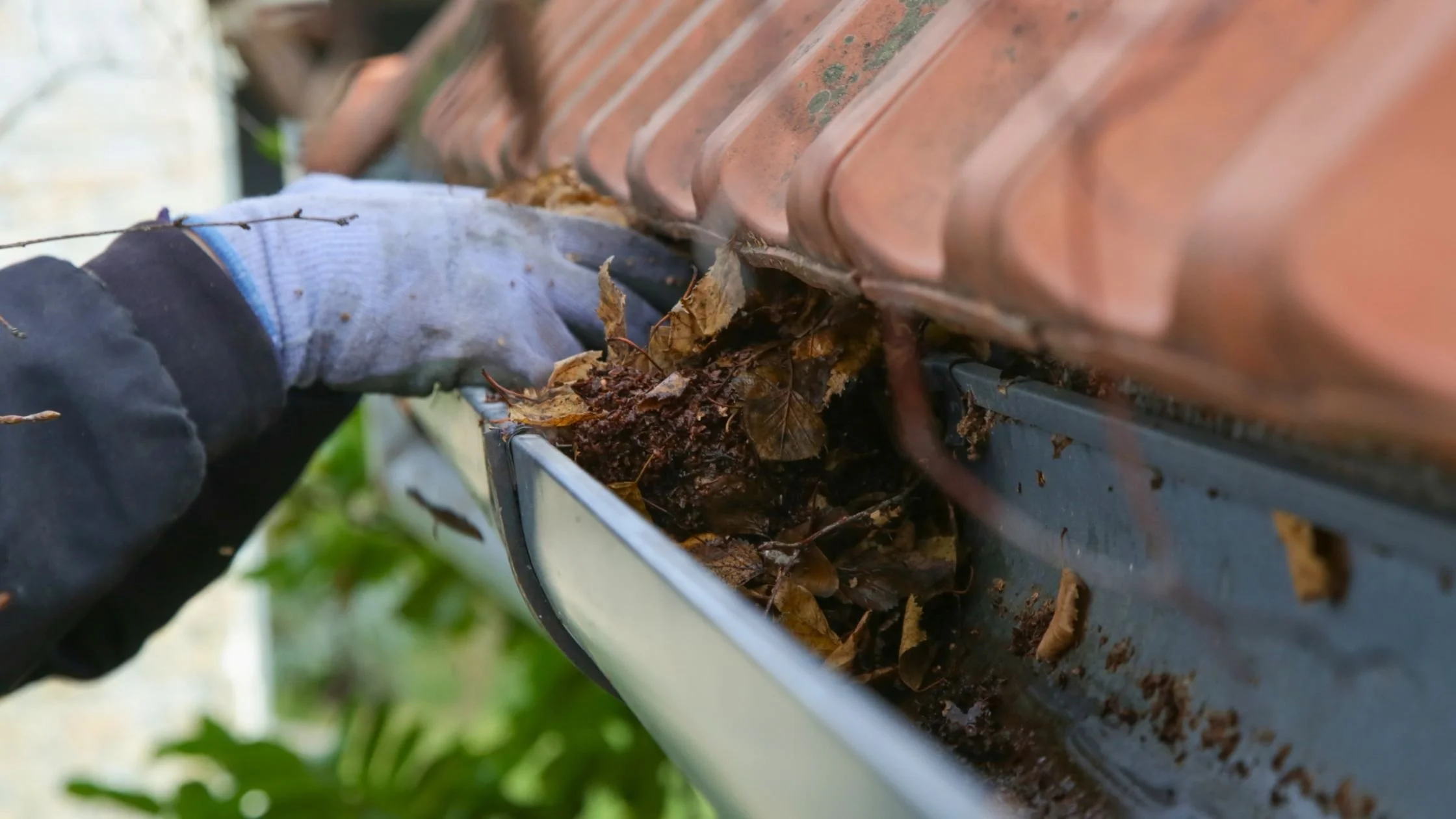
When gutters are stuffed with leaves, melting snow has nowhere to go. It freezes at the edge of your roof and builds a little ice wall called an ice dam. Then the water backs up under your shingles and drips into your ceiling. Not the kind of surprise anyone wants in February.
Wait until most of the leaves have fallen, then scoop everything out.
Make sure your downspouts send water a metre or two away from the house, not straight down beside your basement.
Look for any droopy sections. Snow is heavy, and a loose gutter won't survive the season.
2. Turn Off Your Outdoor Taps
This takes five minutes and could save you thousands. Water left in an outdoor tap can freeze, expand, and burst the pipe inside your wall.
Unhook your garden hose and drain it.
Find the shut-off valve inside for that tap (it's usually in the basement) and turn it off.
Go back outside and open the tap so any leftover water drains out.
Done. Pat yourself on the back.
3. Give Your Roof a Once-Over
No need to climb up there. Just stand in the yard and look for missing or curled shingles or anything that looks loose around the chimney. Halifax wind is very good at finding weak spots. If something looks off, call a roofer now. By January, they'll be booked solid.
4. Trim Those Branches
Wet Nova Scotia snow is heavy. Branches hanging over your roof, car, or driveway can come crashing down after a big storm. Trim what you safely can.
If a branch is anywhere near a power line, leave it to the pros. Seriously. No DIY on that one.
5. Get Your Driveway Game-Ready
Put stakes along your driveway edges so you (or the plow guy) don't scrape up your lawn.
Book snow removal now if you hire someone. The good ones fill up fast.
Buy salt, sand, and a decent shovel before the first storm. You know the hardware store will be sold out the day it hits.
Put away the patio chairs. A Halifax wind gust can turn a lawn chair into a flying object.
House Owners, Part 2: Heating and Frozen Pipe Prevention
Halifax homes are heated with just about everything: oil, heat pumps, electric baseboards, wood stoves, and often a mix of these. Whatever you've got, here's the golden rule: don't wait for the coldest night of January to find out it's broken.
6. Get Your Heating Checked
Oil furnace? Book a cleaning and tune-up. While the technician is there, ask how your oil tank is holding up. Insurance companies here care a lot about how old your tank is, and an old one can cause headaches later, including when you sell.
Heat pump? Clean the filters inside (it's easier than it sounds, and many brands suggest doing it monthly in winter). Outside, make sure the unit sits up off the ground so it doesn't get buried in snow.
Wood stove or fireplace? Get the chimney swept before your first cozy fire. Your insurance company may ask for an inspection, so keep the paperwork.
Furnace vents on the side of your house? Those little pipes poking out of the wall need to stay clear of snow all winter. If they get blocked, your heat can shut off, or worse, carbon monoxide can build up inside.
7. Don't Let Your Pipes Freeze
Frozen pipes are one of the most common (and most expensive) winter disasters. A few easy moves:
Find your main water shut-off valve today, and show everyone in the house where it is. If a pipe ever bursts, this is the first thing you'll need.
Wrap pipes in chilly spots, like the crawl space or garage, with foam pipe insulation from the hardware store.
On really cold nights, open the cupboard doors under sinks on outside walls so warm air can get to the pipes.
8. Hunt Down the Drafts
On a windy day, hold your hand near the edges of windows and doors. Feel a breeze? That's your heating money escaping. New weatherstripping and a tube of caulking cost very little, and you'll notice the difference right away.
Thinking about bigger upgrades, like new windows or a heat pump? Check out Efficiency Nova Scotia first. They may have rebates that cover part of the cost. (We've also rounded up other rebates and assistance programs for Nova Scotians.)
9. Test Your Alarms
Press the test button on every smoke alarm and carbon monoxide (CO) detector, and swap in fresh batteries.
Have a CO detector on every floor where people sleep, especially if you heat with oil, gas, or wood.
Check that your fire extinguisher is charged and easy to grab.
Condo Winter Maintenance: You're Not Off the Hook (But Almost)
One of the best things about condo life? Someone else shovels the walkway and fixes the roof. That's part of what your condo fee pays for. (Curious where the rest goes? We broke it all down in Where Does Your Condo Fee Actually Go? And if you're shopping for a condo, here's how to read a condo's reserve fund study to see if the building is ready for big repairs.)
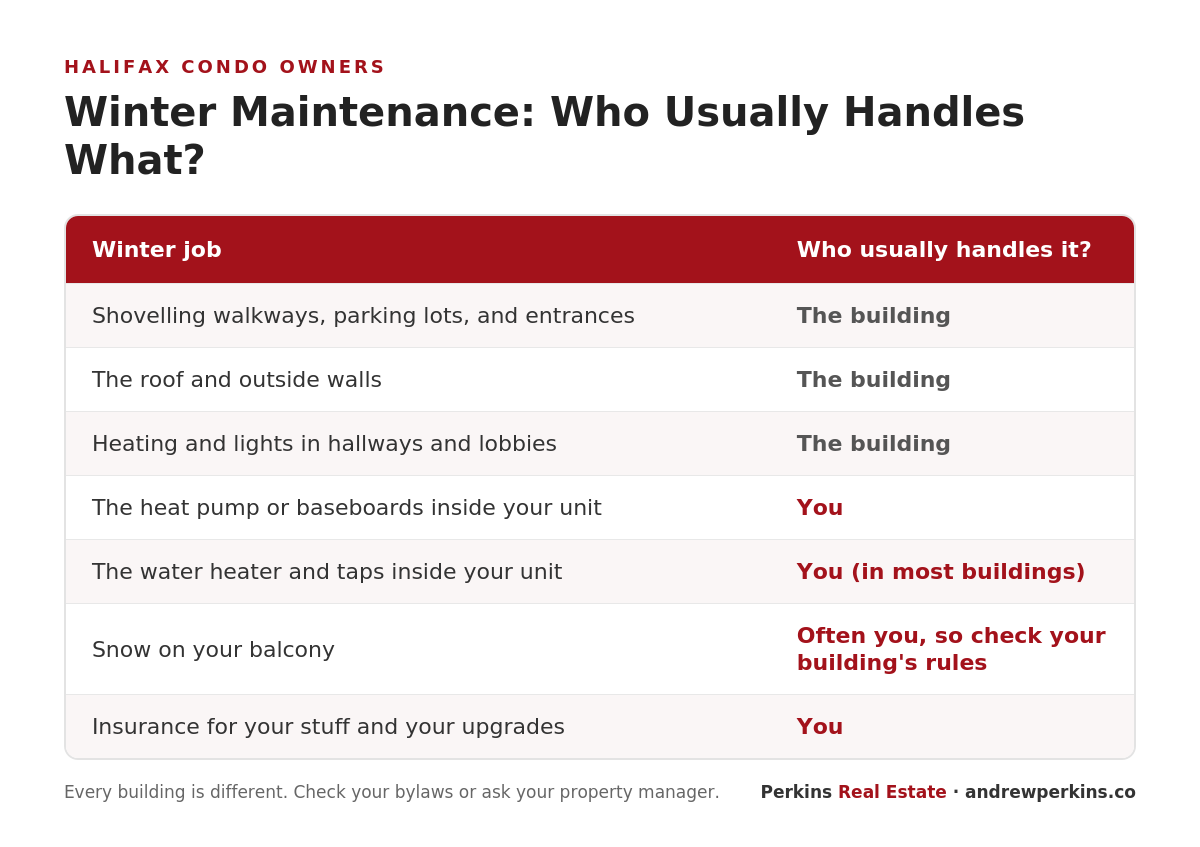
But "low maintenance" isn't the same as "no maintenance." The tricky part is knowing what's your job and what's the building's job. Every building has its own rules, but here's how it usually works in Halifax:
Your Condo Winter To-Do List
Show your heat some love. Clean your heat pump filters and make sure your baseboards actually turn on before you need them.
Watch your windows. A little fog on a cold morning is normal. Water pooling on the sill every day isn't. Let management know early, before it turns into mould.
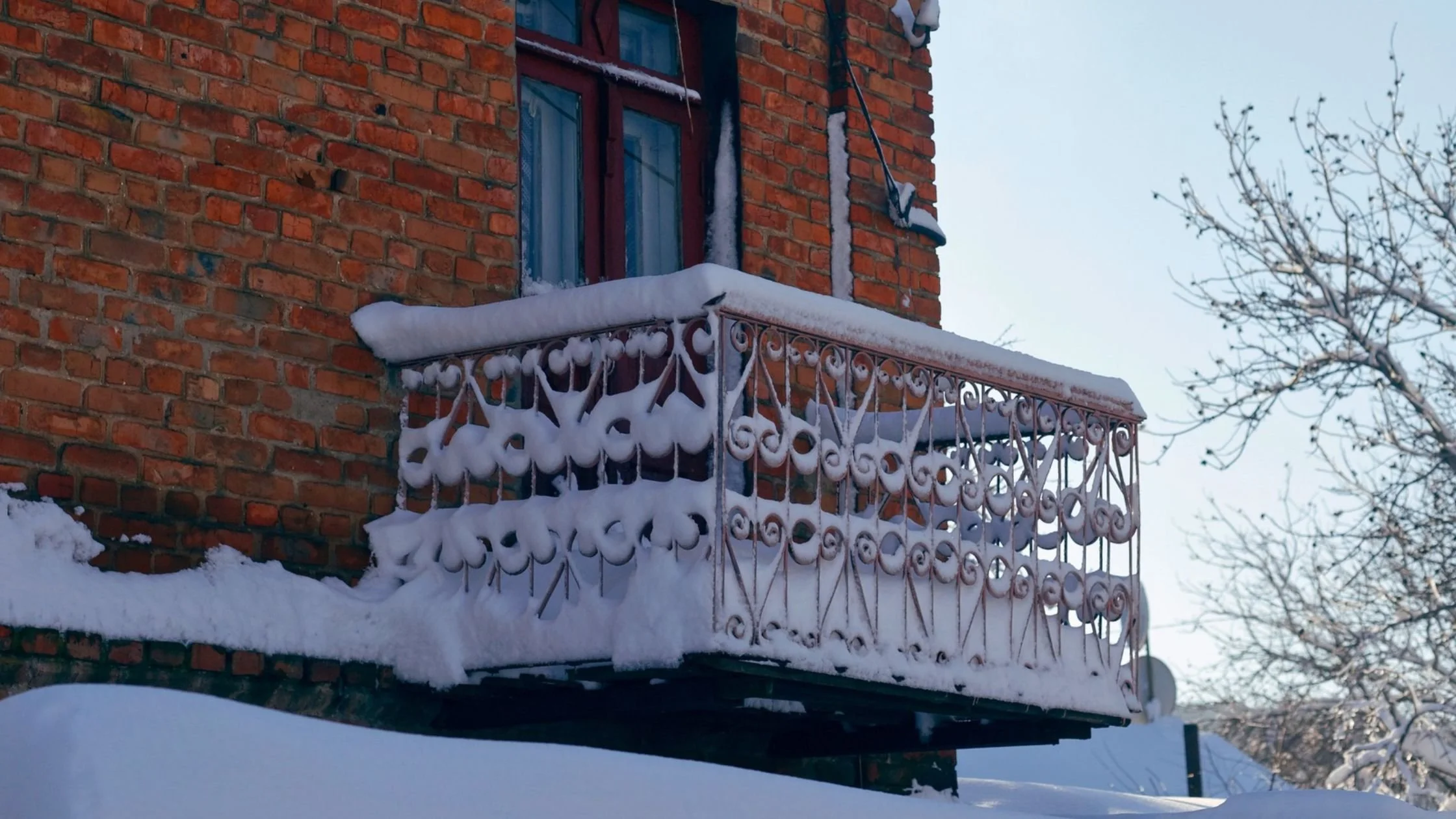
Check the balcony rules. Many buildings don't allow rock salt on balconies because it can damage the concrete. Find out what you can use before the first freezing rain.
Bring in the balcony stuff. Harbour winds plus a loose patio chair is a bad combination (just ask your downstairs neighbour).
Call your insurance broker. Ask this exact question: "If a leak starts in my unit, am I covered for the building's deductible?" That deductible can be thousands of dollars, and it may land on you.
Never turn your heat all the way off, even if you're heading away. Cold units can freeze shared pipes, and many buildings require you to keep the heat on.
Going away for a while? Tell your property manager and leave a contact who can get into your unit in an emergency.
Everyone: Halifax Winter Tips (Parking Ban, Storms, and More)
Whether you've got a house in Bedford or Sackville, a townhouse in Clayton Park, or a condo in the North End or downtown Dartmouth, these ones apply to all of us.
Don't Get Towed: The Halifax Winter Parking Ban
Every winter, HRM has an overnight parking ban that usually runs from mid-December to the end of March. When it's on, cars parked on the street overnight can be ticketed or towed so the plows can do their thing.
Sign up for HRM's alerts so you'll know when it's in effect. And tell your guests, too, before Aunt Linda's car gets hauled away on Christmas Eve.
Keep Your Snow on Your Side
We've all been tempted to fling driveway snow into the street. Don't! It's against the rules in HRM, and it makes life harder for the plows and your neighbours. Pile it on your own property instead.
Be the Neighbour Everyone Loves
Dig out the fire hydrant near your house if it gets buried. Firefighters need to find it fast.
Clear the storm drain at the end of your driveway when things start to melt. It helps stop your street from turning into a lake.
Check on older neighbours after a big storm. A quick knock goes a long way. It's the Nova Scotian way.
Pack a Storm Kit (Before You Need It)
In Nova Scotia, power outages in winter aren't a question of if. They're a question of when. Have these ready:
Flashlights and extra batteries (not just your phone)
A radio that runs on batteries or a hand crank
Enough water and easy food for at least 3 days
A charged power bank for your phones
Medications and extra blankets
Bookmark Nova Scotia Power's outage map on your phone. And if you use a generator, never, ever run it inside or in an attached garage. The fumes can be deadly.
Escaping to Florida This Winter?
Lucky you! But before you go, call your home insurance company. Many policies say someone has to check on an empty home regularly in winter. If a pipe bursts and nobody's been by, your claim could be in trouble. Line up a neighbour, family member, or house-check service before you leave.
The Cheat Sheet: Your Printable Winter Home Maintenance Checklist
Too long, didn't read? We get it. Screenshot this part, stick it on the fridge, and tick things off as you go.
This month (November)
☐ Clean the gutters
☐ Turn off and drain the outdoor taps
☐ Book a heating check-up
☐ Book snow removal (if you hire it out)
☐ Trim branches over the roof and driveway
☐ Condo owners: check balcony rules and call your insurance broker
Before the first big storm
☐ Buy salt, sand, and a good shovel
☐ Put stakes along the driveway
☐ Pack your 3-day storm kit
☐ Test smoke and CO alarms
☐ Sign up for HRM parking ban alerts
All winter long
☐ Keep furnace vents and heat pumps clear of snow
☐ Clean heat pump filters
☐ Keep an eye out for ice dams and wet window sills
☐ Dig out the hydrant and storm drain near you
Halifax Winter Home Maintenance FAQ
When does the Halifax winter parking ban start?
HRM's overnight winter parking ban usually runs from December 15 to March 31, between 1 a.m. and 6 a.m. It's enforced when the city announces it for storms and snow clearing, so sign up for HRM's alerts to know when it's on.
How do I keep my pipes from freezing in Nova Scotia?
Turn off and drain your outdoor taps, wrap pipes in cold spots like crawl spaces, and open the cupboards under sinks on outside walls on very cold nights. Never turn your heat completely off, even when you're away, and know where your main water shut-off is in case a pipe does burst.
Who clears the snow at a Halifax condo?
In most buildings, the condo corporation clears walkways, parking lots, and entrances. Snow on your own balcony is often your job. Your building's bylaws have the final word, so check with your property manager if you're not sure.
When should I get my furnace or heat pump serviced?
Fall is best, ideally October or November, before the first real cold snap. Heat pump filters need attention more often, and many brands suggest cleaning them monthly during winter.
Can I push snow from my driveway onto the street in Halifax?
No. HRM doesn't allow pushing or blowing snow onto streets or sidewalks. Pile it on your own property instead.
A Little Work Now Pays Off Later
Winter prep isn't just about staying cozy (although that's a pretty great perk). It's about protecting what's probably the biggest thing you own.
Here's a little insider secret: when it's time to sell, buyers and home inspectors notice. A well-cared-for furnace, a solid roof, and a home that's clearly been looked after can make a real difference in how buyers feel and what they're willing to offer.
And if you're thinking of selling this winter or getting ready for spring, this list does double duty. Clear walkways, a warm house, and no surprise repairs make a great first impression at showings. (Here's why winter can be a smart time to sell, plus our tips on pricing your Halifax home right.)
Thinking about your next move, or just curious what your home is worth this winter? Give Andrew Perkins and the Perkins Real Estate team a shout. We're always happy to chat, with zero pressure. Or grab a hot chocolate and browse our current Halifax listings to see what's out there.
Stay warm out there, Halifax!
Author: Jordan Gunn
Real Estate Assistant
Perkins Real Estate
Keller Williams Select Realty